A History of the Paramus Health Department
Six years prior to the establishment of Paramus in 1922, Bergen County built an isolation hospital which would cater to the growing needs of those stricken by communicable disease. In 1916, modern-day Paramus was chosen as the site for the Bergen County Isolation Hospital, as it was a clean air region which could aid patients in recovery. The hospital treated patients for a myriad of diseases, including smallpox, chickenpox, tuberculosis, and polio. New buildings were constructed on the facility’s land, with each building catering to the treatment of a specific disease. This facility significantly impacted the small farming community of Paramus, turning it into a hub for public health and wellness.
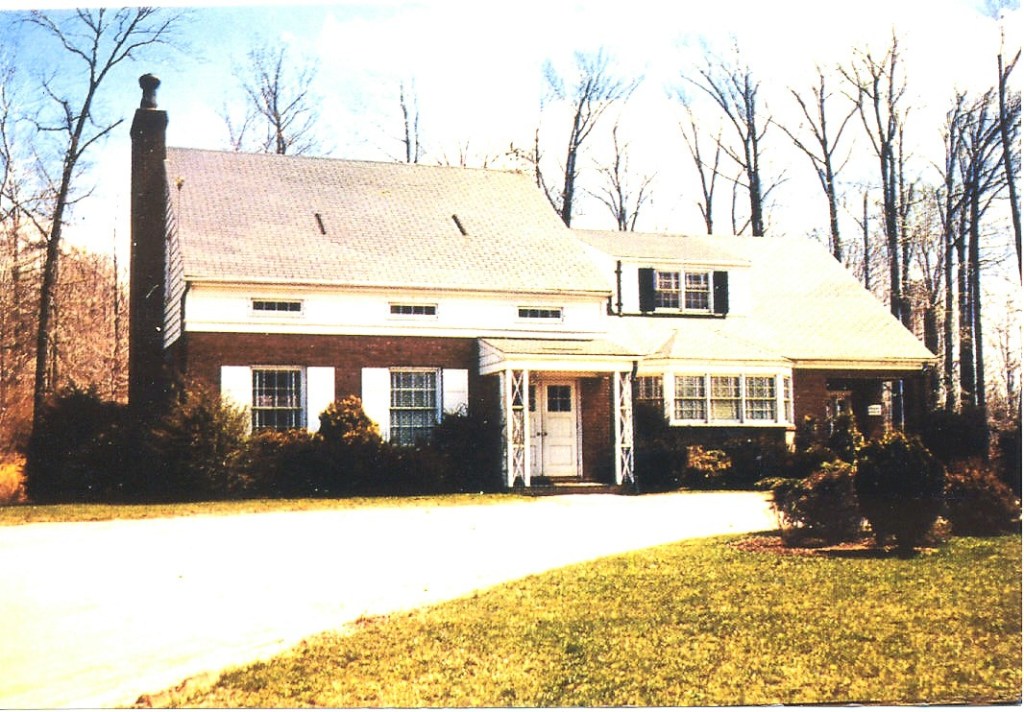
Following the passage of Assembly Bill No. 180 entitled “An Act to incorporate the Borough of Paramus, in the County of Bergen,” a referendum was held, and the electorate voted to establish Paramus as its own municipality, separating from what was known as Midland Township. The new municipality utilized the original School No. 26 of Midland Township as borough hall. The former schoolhouse, built in 1876, held borough offices, as well as the police department. The building still stands today as the Charles E. Reid Branch Library on Midland Avenue. Once established, the Paramus Health Department and the Board of Health were soon created. The first works of the Board of Health were published on May 31, 1923, as the initial Sanitary Code of Paramus was printed in the Ridgewood News. The Code detailed the specific and essential roles and responsibilities of Department and Board members, as well as general health regulations for Paramus.
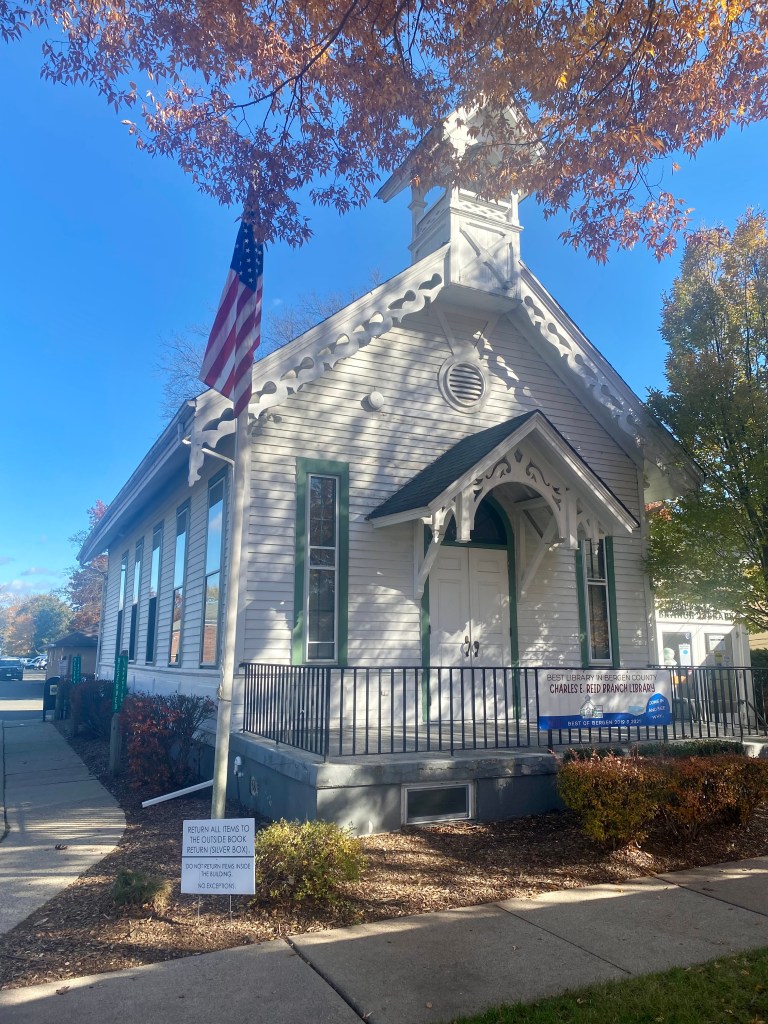
Charles E. Reid Branch Library, formerly Paramus Borough Hall
The Sanitary Code begins by explaining that the Board of Health will elect a President and Vice President annually at the regular January meeting. Then, the President has the responsibility of appointing a Sanitary Inspector or Health Officer, with the confirmation of the Board, who will serve for a one year term. The same process would be performed to appoint a Secretary and a Registrar of Vital Statistics, each serving three year terms. The Code further explains orders concerning an abundance of topics, including nuisances, food handling, stables and stable manure, and communicable diseases.
A strictly enforced 12 hour period was given for physicians to report any disease to the Board of Health, and once confirmed by the Board to be a communicable disease, a placard would be placed upon the home of the infected individual. The placard would name the disease, and it was to remain on the premises until the home was disinfected by the Board of Health. Once the placard would be placed on a home, no person would be allowed to enter or leave, except for medical professionals caring for the infected individuals. The Sanitary Code also enforced strict isolation periods for each communicable disease, including a 12 day isolation period for chickenpox, a two week isolation period for mumps, and a lengthy six week isolation period for acute anterior poliomyelitis (infantile paralysis).
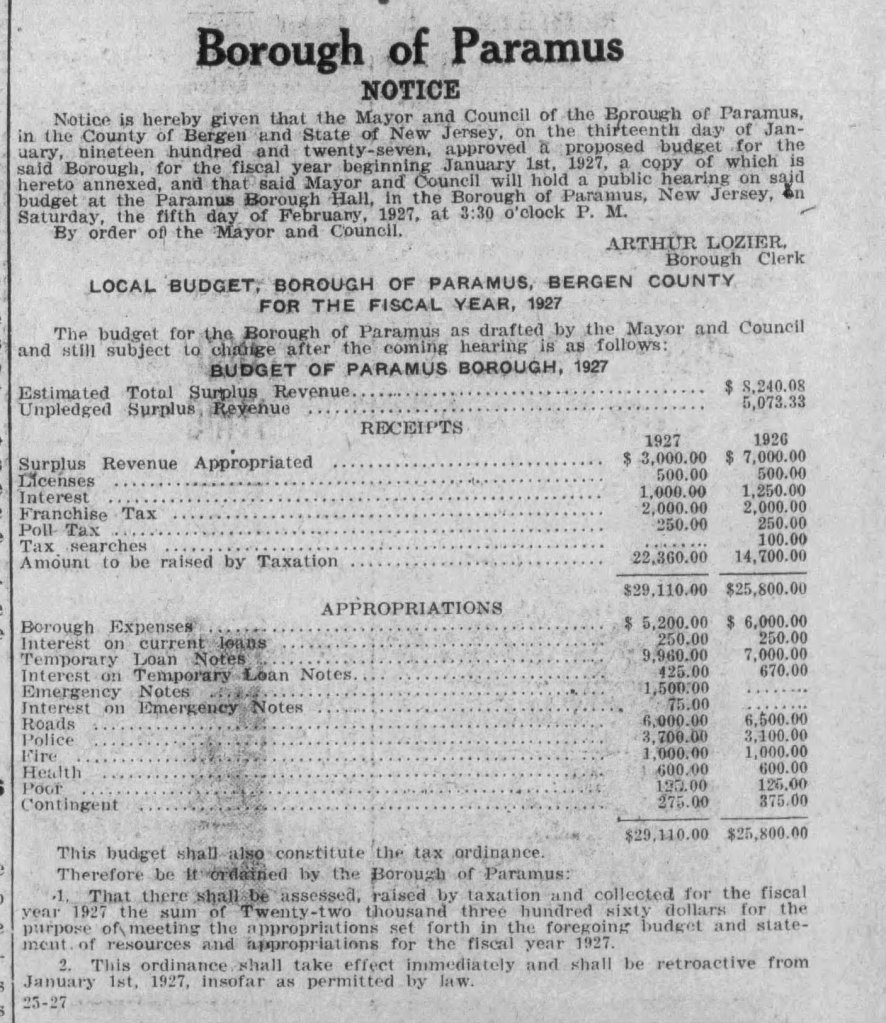
The Paramus Health Department’s proposed budget in 1927 was $600. In total, the Borough of Paramus appropriated $29,111 to sustain Borough services, with almost 20% of these funds allocated to pave and maintain roads.
Containing communicable disease would continue to be a crucial responsibility of the Paramus Health Department. Under the leadership of Health Officer William Schwartz in 1930, the Bergen County Health Association asked the Department to participate in vaccinating all school and pre-school children against smallpox. At the time, a smallpox epidemic took place in Ohio, and vaccinating children in Paramus was determined be the most proactive way to ensure the health of the community. In 1934, Board of Health nurse Evelyn Sipp created a new file system which made it possible to track a child’s physical history. This was done by canvassing all homes where pre-school children lived, and identifying which children have been vaccinated. The investigation showed that 73 pre-school aged children in Paramus were immunized by Board of Health physician Dr. R. N. Blake.
Aside from vaccinating children, other steps to contain disease included the mandatory medical examination of all food handlers in Paramus. On Wednesday July 11, 1934, the Health Department held its first medical tests for food handlers. Board of Health physician Dr. R. N. Blake performed these tests, and each food handler that passed the test would be issued a certificate which was required to be renewed every six months. During this time, the Board had great power over food establishments in Paramus. If an establishment wanted to hire a new employee that would be working with food, the Board was responsible for approving the candidate.
By the late 1930s, the newly appointed Health Officer Dr. Sherman K. Foote (1874-1955) split his time between leading the Paramus Health Department and serving as the school physician for numerous districts in Bergen County. On Tuesday January 23, 1945, the Paramus Board of Health accepted the resignation of Dr. Foote as Health Officer at their monthly meeting. After more than five years with the Health Department, Foote decided to focus on his medical work. To replace Dr. Foote, Max H. Thiem (1888-1976), the first mayor of Rochelle Park, was appointed as the new Health Officer. According to Thiem, the Board of Health’s office was in one of the member’s homes when he began. This practice became increasingly more common as Paramus Borough Hall was not large enough to house all Paramus employees.
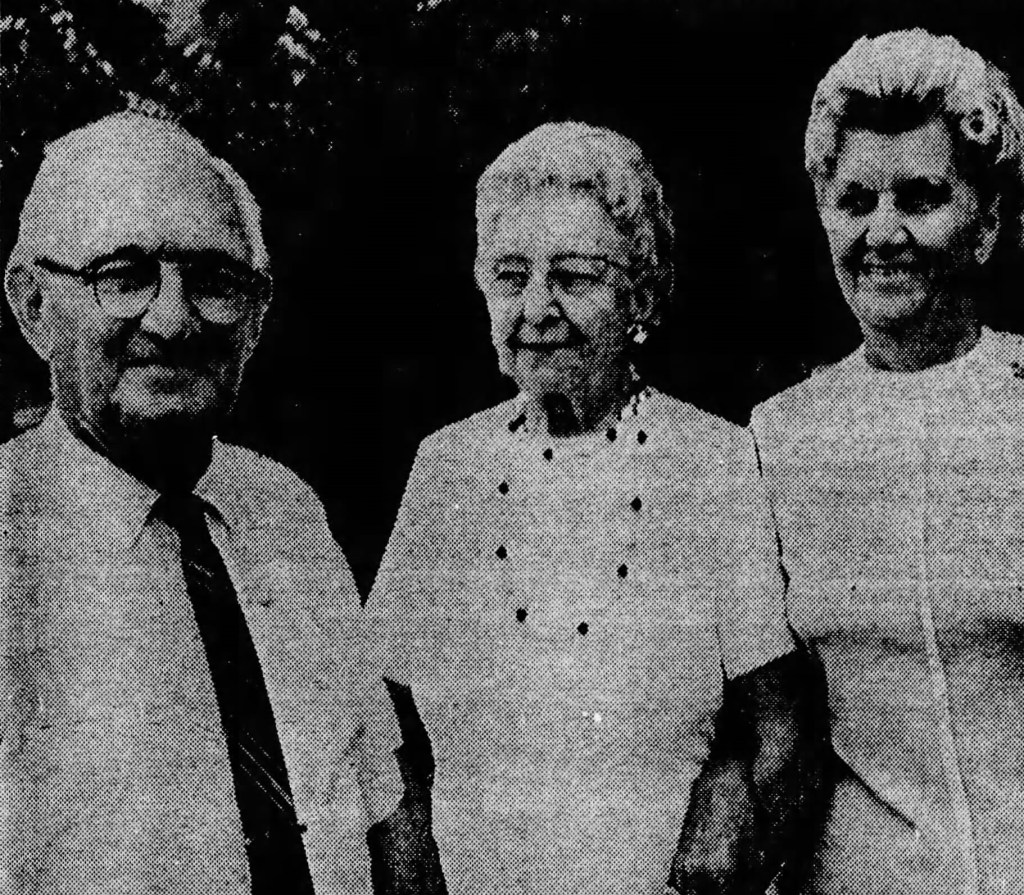
Cora Randall Baker (center)
Thiem’s efforts as Health Officer in the 1940s focused greatly on vaccinating school children from diseases including measles, mumps, typhoid fever, and diphtheria. The Paramus Health Department gave triple shots to all school children, which resulted in a steady decline of these diseases in the borough. Board of Health nurse Cora Randall Baker (1894-1980) was a triumphant force in assisting Thiem’s efforts to vaccinate school children. Baker was born in modern-day Paramus, growing up one of 10 children on the Randall family farm. Following her graduation from Paterson General Hospital Nursing School in 1917, Baker enlisted in the Army Nurse Corps, serving at Fort Dix and in France during World War I. When she returned to Paramus in the late 1930s, Baker took on the role of Board of Health nurse, and strengthened programs including Baby Keep-Well, which provided physical examinations, immunizations, and health evaluation services to children of Paramus.
The Former Paramus Borough Hall,
1950s-1960s
Between 1950 and 1960, the population of Paramus grew an estimated 270%, seeing an influx of over 17,000 new residents. Coupled with the opening of the Garden State Plaza in 1957 and new improvements to Route 4 and 17, business in Paramus flourished. The increased need for Borough office space led to Borough Hall moving to the Garden Inn, a shuttered restaurant on Route 17. The new Borough Hall was a temporary fix for a lack of office space, but by the 1960s, Paramus faced an issue which The Record identified as a “problem of split personality.” The Health and Recreation Boards moved from Borough Hall to a former six-room police headquarters on Farview Terrace, creating confusion over the location of borough offices. This led to a debate over the necessity of a new and improved municipal building, which could house each and every department. In 1966, a scale model of a newly proposed Borough Hall was unveiled, which would be built along Route 17 and Carlough Drive. The architect’s estimated cost of the project was $550,000, but as contractors quoted estimates more than $400,000 higher the proposed estimate, changes needed to be made to bring the cost down. By 1968, Borough Hall was opened, and centralized the municipal departments of Paramus.
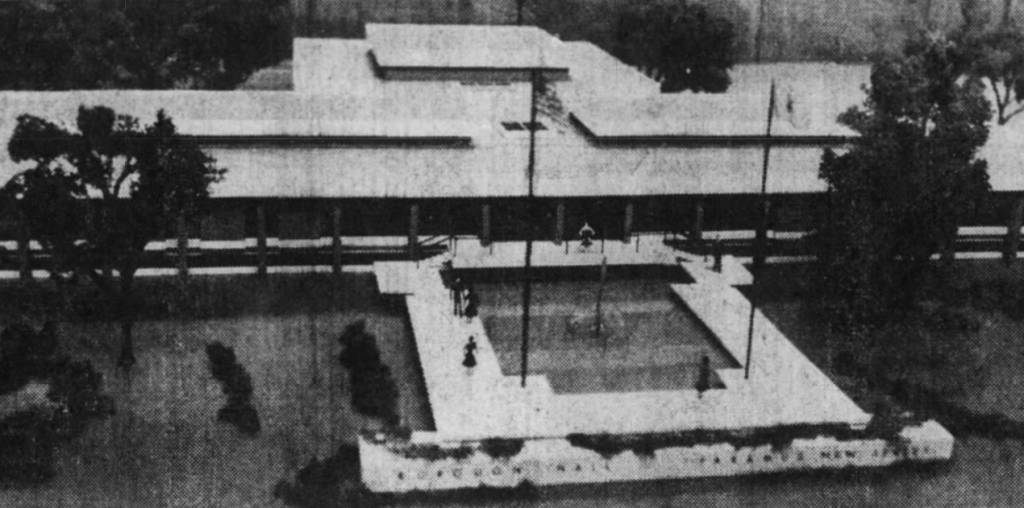
Model of the Proposed Borough Hall Building, 1967
With the Health Department settled into the new Borough Hall, Murray Muetter (1910-1988) replaced Thiem as the new Health Officer. Muetter, with 30 years of experience working for the New York City Health Department, brought with him many new initiatives to improve Paramus and the community’s health. First, by enlarging the department’s staff, Muetter ensured that the growing number of food establishments could be appropriately examined, and the expanding population of Paramus residents would be cared for. Under Muetter’s leadership, the Health Department began sanitation courses in 1971, geared toward local food handlers. The two-part course explained proper food handling, refrigeration, and storage in order to limit the risk of food poisoning. The initial program was attended by about 30 kitchen employees, and the success of the initiative prompted the Department to hold the course annually.
Health Officer Murray Muetter standing outside Paramus Borough Hall, 1980
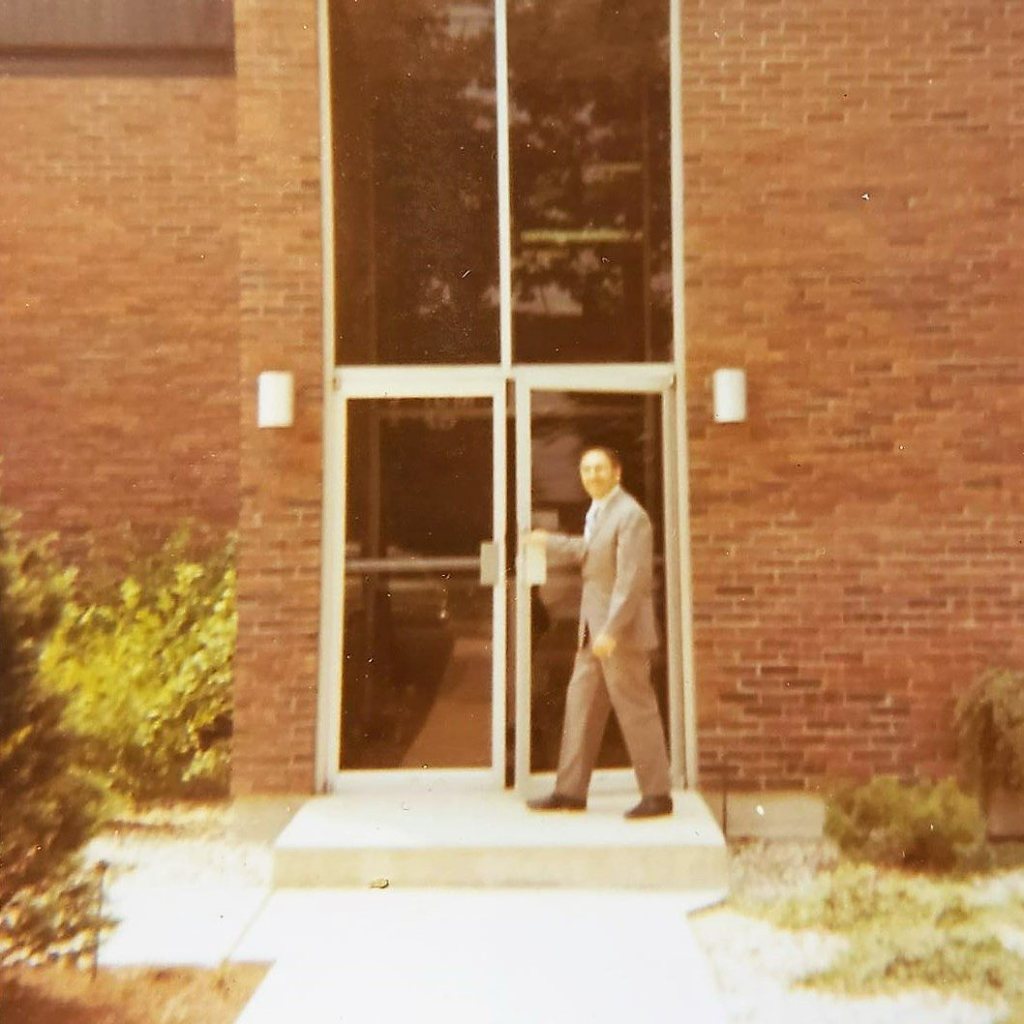
Muetter also began a senior flu vaccination program in 1972, which was previously only available to employees of the Borough. This program has taken place annually since then, and has been a crucial part of safeguarding the health and wellbeing of Paramus’ senior population. Muetter’s focus was also on assuring children were well cared for. In 1974, the Health Department immunized 765 children against measles in one week. The following year, the Department set up a community Alcohol Education Program, providing school children with literature, slides, and films in an Alcohol Awareness Mobile Unit, which was transported to various industrial parks, shopping centers, and community centers located in Paramus.
Following Muetter’s retirement in 1980, John Hopper took over as Health Officer of the Department. A 1973 Rutgers University graduate, Hopper was already employed by the Health Department as a Health Inspector, later becoming Muetter’s Assistant Health Officer. Hopper’s leadership extended beyond Paramus, as he was appointed president of the Bergen County Health Officers’ Society in 1980. This organization’s membership was composed of Bergen County health officers, health inspectors, plumbing inspectors, and public health nurses. With the changing needs of the community, Hopper prioritized new programs to expand access to health care, tackle obesity, educate residents about nutrition and physical activity, destigmatize mental health, strengthen communication, and limit the usage of alcohol, tobacco, and other drugs among community members. As the longest serving Health Officer in Paramus history, Hopper’s 30 years as executive of the Health Department saw many unique public health challenges. Hopper dealt with issues including the West Nile Virus, the anthrax scare following 9/11, and the pandemic flu. These elements, coupled with an increased need for food establishments inspections, demonstrate the important and dynamic responsibilities of the Health Department.
After 37 years with the Paramus Health Department, Hopper retired in 2011, leading the way for Judith Migliaccio to lead the Department. Migliaccio began with the Department in 1988 as a Health Inspector, and served as Assistant Health Officer. A notable initiative during Migliaccio’s time as Health Officer was the annual Paramus Weight-Loss Challenge, which began in 2013. The 12-week program promoted positive behavior and lifestyle changes, all while created a support group among its participants. In its second year, more than 180 participants joined, and lost a combined 770 pounds.
In May of 2021, Joanna Adamiak replaced Migliaccio as Health Officer of the Department. With a commitment to strengthening local public health, especially amid the COVID-19 pandemic, Adamiak is optimistic about the road ahead and the role the Department plays in Paramus’ recovery. In 2022, the Paramus Health Department celebrated its 100th anniversary by commemorating those who played such an important role in shaping our community through public health initiatives. Our history demonstrates that our community is resilient, and taking a proactive approach to public health is the best way to ensure the wellness of each individual.
 Paramus Health Department